Film's catalog

Loading...
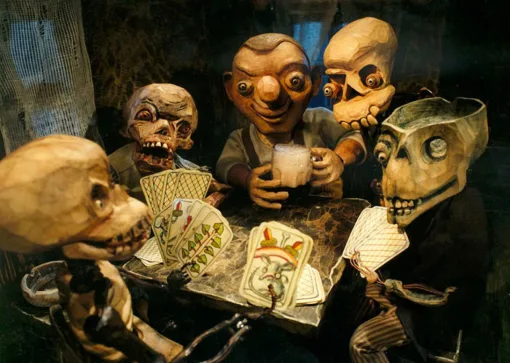
Jan Werich’s Fimfárum is an anthology film composed of five not-so-fairy-tales but rather moralities on human vices. Directed by Vlasta Pospíšilová and Aurel Klimt, these five stories connected by Werich’s voice create a compact film. It has been nearly twenty years since the premiere of this film. It has slowly left its place in modern Czech cinema, acquired a status of Czech classic and has now been restored and digitalised. The process started with rewriting the original intermediate negative which formed the original video master. The colour corrections were overseen by Aurel Klimt and in the most important phases also by cinematographer Zdeněk Pospíšil. Some matters were also discussed remotely with cinematographer Vladimír Malík. The most demanding and time-consuming process was removing imperfections and restoring the damaged film stock. The authors took into consideration the viewers and in spite of the opinion of film historians, they removed various technical mistakes as well (animation lines, hair in the frames, light differences in individual shots, forgotten objects in scenes). “From my point of view, the result has the best possible quality which could be achieved by using modern technical equipment, and I would like to wish you a very pleasant experience when watching our film in the cinemas eighteen years after it was first screened,” says Aurel Klimt to the cinemagoers.
Jan Werich’s Fimfárum is an anthology film composed of five not-so-fairy-tales but rather moralities on human vices. Directed by Vlasta Pospíšilová and Aurel Klimt, these five stories connected by Werich’s voice create a compact film. It has been nearly twenty years since the premiere of this film. It has slowly left its place in modern Czech cinema, acquired a status of Czech classic and has now been restored and digitalised. The process started with rewriting the original intermediate negative which formed the original video master. The colour corrections were overseen by Aurel Klimt and in the most important phases also by cinematographer Zdeněk Pospíšil. Some matters were also discussed remotely with cinematographer Vladimír Malík. The most demanding and time-consuming process was removing imperfections and restoring the damaged film stock. The authors took into consideration the viewers and in spite of the opinion of film historians, they removed various technical mistakes as well (animation lines, hair in the frames, light differences in individual shots, forgotten objects in scenes). “From my point of view, the result has the best possible quality which could be achieved by using modern technical equipment, and I would like to wish you a very pleasant experience when watching our film in the cinemas eighteen years after it was first screened,” says Aurel Klimt to the cinemagoers.