Film's catalog

Loading...
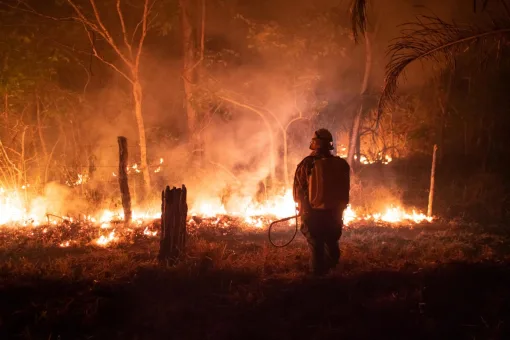
Chaqueo is Bolivian practice of burning down the forest in order to gain cultivable land, in 2019 this practice was made legal recognizing fire as a legal tool for the cultivation of the land. What followed were the worst fires that the country ever experienced. The movie introduces the problem of the Chaqueo and shows the effort of voluntary firemen groups that are trying to save the most vulnerable places such as human settlements and natural reservations. The movie starts during the night fire with narration of one of the firemen describing his experience of the fire and continues with firemen's effort to stop the fire. It shows which techniques they use and very simple training that complete beginners undergo before they enter the mission. The story culminates in the last big fire and the relief comes with the rain that finally extinguishes the catastrophe.
The main emphasis of the film is not to explain the problematic in detail, but rather to make the viewer contemplate the reasons this situation is happening and the direction that humanity is taking.
Director's note: We see the strongest side of the document in the underreported situation that the movie is portraying. While the fires in Brazil were followed by the broad public, the situation in Bolivia remained almost unnoticed although it's intensity matched it's Brazilian counterpart. Chiquitania that was mostly affected by the fires is the unique region of the world. The Bosque Chiquitano is the world's largest remaining dry-forest and the fires have put it into severe risk.
The movie doesn't however concentrate on the problem from a local point of view but rather tries to draw larger implications for the whole world. Bolivia and the situation around the fires is introduced as a problem of the society as a whole and the viewer is asked to consider his own participation in the problem. In the movie we try to highlight it's philosophical and emotional aspect using meditative imagery and touching music. We are not explaining the problem but letting the viewer be a part of it.